


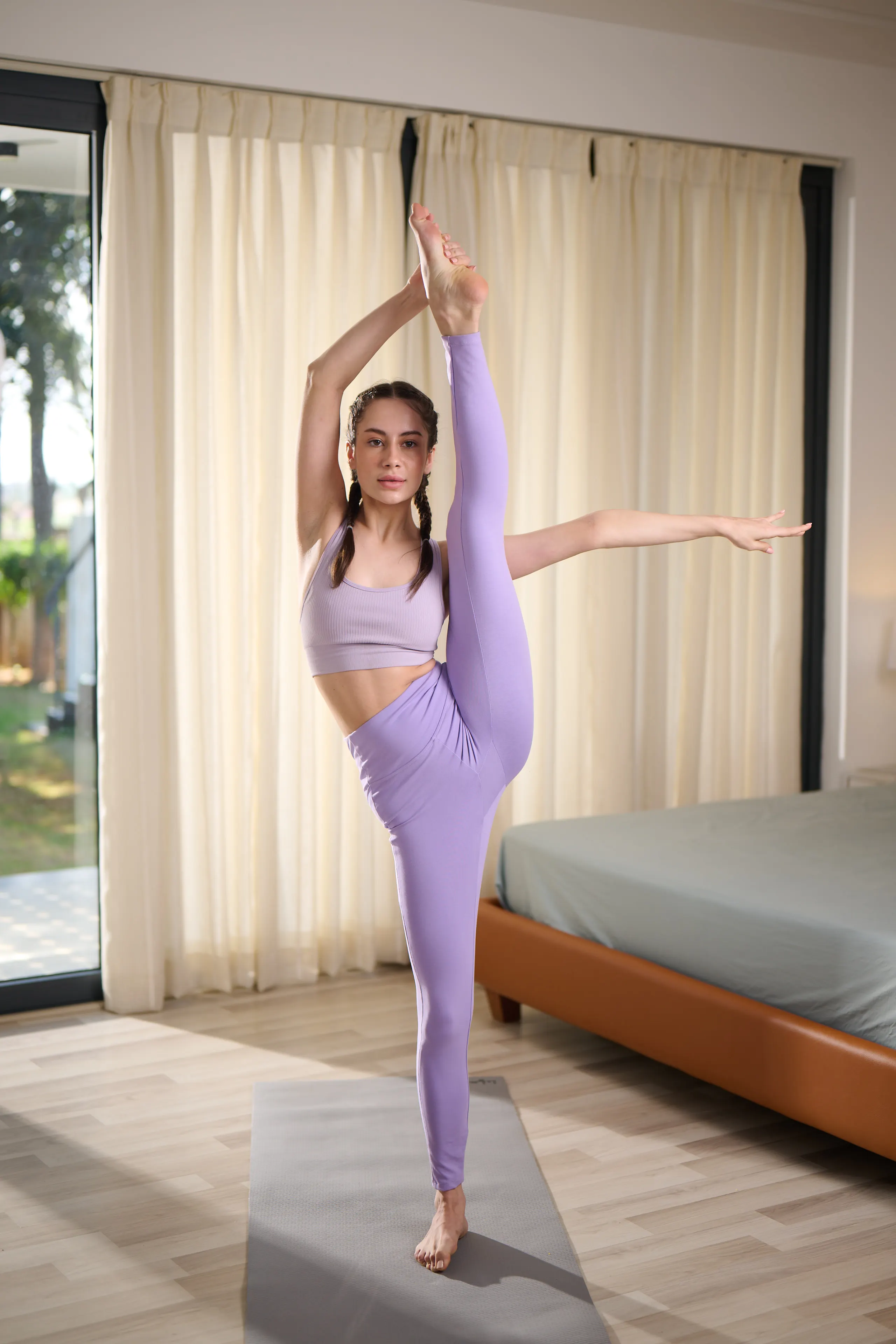

What is Vaamanasana ?
Vaamanasana , also known as Trivikramaasana or the "Standing Split Pose," combines balance, flexibility, and strength. In this asana, the practitioner stands on one leg while lifting the other leg upward, aiming to bring it as close to vertical as possible, thereby creating a deep forward bend over the standing leg. This pose provides an intense stretch to the hamstrings, calves, and hips, while also engaging the core muscles to maintain balance. Regular practice of Vaamanasana can enhance overall flexibility, improve balance, and promote mental focus. It's important to perform this pose with proper alignment, ensuring that the hips remain squared to the front to prevent strain.
Position type: Split
Posture type: Standing
Ideal for: Flexibility and mobility
Targets: Hips and groin
Pose level: Advanced
How to prepare for Vaamanasana ?
Practitioners should focus on improving their hamstring flexibility, hip mobility, and overall balance to prepare for Vaamanasana . These preparatory stretches and poses not only warm up the body but also help achieve the right alignment for this standing split pose.
- Hamstring flexibility: Practice poses like Standing Forward Fold (Uttanasana), Half Splits (Ardha Hanumanasana), Pyramid Pose (Parsvottanasana), and Seated Forward Bend (Paschimottanasana). Incorporating dynamic stretches such as Leg Swings or Reclined Hand-to-Big-Toe Pose (Supta Padangusthasana) can also help lengthen the hamstrings.
- Hip mobility: Work on poses like Garland Pose (Malasana), Low Lunge (Anjaneyasana), Pigeon Pose (Eka Pada Rajakapotasana), and Butterfly Pose (Baddha Konasana) to loosen up the hips and improve range of motion.
- Balance and core strength: Strengthen your balance and core with poses like Tree Pose (Vrikshasana), Warrior III (Virabhadrasana III), Half Moon Pose (Ardha Chandrasana), and Plank variations. These will help you maintain stability in Vaamanasana .
- Warm-ups: Include dynamic movements like Sun Salutations (Surya Namaskar) and leg stretches against the wall to ensure your muscles are warm and ready for deeper stretches.
Consistent practice of these poses and stretches will help prepare your body for the demands of Vaamanasana while minimizing the risk of strain or injury.
How to do Vaamanasana ?
Getting into the posture:
- Stand tall with your feet hip-width apart, grounding firmly through your feet. Align your spine, relax your shoulders, and take a few deep breaths.
- On an exhale, hinge at your hips and fold forward, keeping your spine long. Place your hands on the ground or yoga blocks for support.
- Gradually shift your weight onto one leg (e.g., the right leg), rooting firmly through the standing foot. Keep the leg strong and slightly micro-bent to avoid locking the knee.
- Inhale as you slowly lift the left leg straight back and upward. Aim to bring it as high as your flexibility allows, working towards creating a vertical line with the leg.
- Square your hips to the ground to maintain proper alignment. Avoid letting the lifted leg or hip rotate outward. Engage your core and standing leg for stability.
- Hold onto your ankle of the standing leg for added balance or practice by taking the support of a wall or chair. If comfortable, extend one or both arms forward alongside your ears for an additional challenge.
- Stay in the pose for 5–10 breaths, focusing on lengthening your spine and keeping the lifted leg active and straight.
Getting out of the posture:
- On an exhale, gently lower the lifted leg back to the ground and come into a forward fold. Then, slowly rise to a standing position.
- Switch legs and repeat the pose, ensuring balance and equal stretch on both sides.
Key Alignments in Vaamanasana :
- Keep your hips squared to the floor to avoid twisting in the lower back and ensure a stable foundation.
- Engage the standing leg and keep the lifted leg straight and active, aiming for a vertical line.
- Maintain a long, extended spine by keeping the chest open and avoiding rounding your back.
What are the Benefits of Vaamanasana ?
Vaamanasana stretches and strengthens the hamstrings, calves, and hips, improving flexibility and range of motion in the lower body. The pose also enhances balance and stability by engaging the core and promoting body awareness. Regular practice of Vaamanasana helps improve posture by lengthening the spine and opening the chest. It also stimulates blood flow to the brain, improving mental clarity and focus. This pose energizes the body, relieves tension, and can help reduce stress. By increasing flexibility and strengthening key muscle groups, Vaamanasana contributes to better overall mobility and alignment. Beginners may find it helpful to use props, such as yoga blocks or a wall, to support their balance and gradually increase flexibility.
What are the contraindications of Vaamanasana ?
Vaamanasana is not suitable for those with severe hamstring, hip, or lower back injuries. In case of any of these issues, one should avoid or modify the pose to prevent further strain. People with balance issues or instability in the ankles or knees should practice with caution, as the pose requires strong support from the standing leg. Pregnant women should avoid this pose, particularly during the later stages, due to the intense forward bending and balance demands. Individuals with high blood pressure, heart conditions, or neck issues should also avoid the pose, as it may place excessive strain on these areas.
What are the counterposes of Vaamanasana ?
Practice Tadasana or Downward-facing Dog pose for a few minutes after doing Vaamanasana.
.jpg)
Variations of Vaamanasana :
Easy Variations:
- Vaamanasana with Wall: Stand facing a wall with your hands placed on the wall for added support and stability. This variation helps you maintain balance while lifting one leg, allowing you to focus more on the hamstring stretch and alignment. It reduces the intensity of balancing, making it easier to hold the pose while still working on flexibility and strength.
- Vaamanasana with Bent Standing Leg: Instead of keeping the standing leg straight, slightly bend the knee of the standing leg. This variation reduces the hamstring stretch and makes balancing easier, providing a gentler entry into the pose.
Advanced Variations:
- Vaamanasana with Arms Extended: Once in the split, extend both arms forward or overhead, aligning them with the lifted leg. This increases the challenge to your core and improves balance and flexibility.
- Vaamanasana with Foot Grab: In the full split, reach behind with the same-side hand to grab the ankle or foot of the lifted leg. This deepens the stretch in the hamstrings and improves spinal flexibility, requiring greater balance and strength.
Advice for Beginners:
For beginners practicing Vaamanasana , it’s important to start slowly and focus on building foundational strength and flexibility. Use props like blocks or a wall for support, which can help you maintain balance and proper alignment as you develop confidence in the pose. Keep your standing leg slightly bent if you find it difficult to balance, and avoid pushing your lifted leg too high - focus on lengthening rather than deepening the stretch. Always listen to your body, and practice with patience, gradually increasing your flexibility and balance over time.
Shvasa Tips for Practicing Vaamanasana
- Keep your gaze steady on a fixed point to help with focus and balance.
- Always prioritize alignment and avoid overstretching to prevent injury.
- As with all advanced yoga postures, it's advisable to practice Vaamanasana under the guidance of an experienced instructor to ensure safety and effectiveness.
Learn how to practice Vaamanasana live with experienced and authentic teachers on Shvasa.






.png)


%201.svg)


%201.png)


%201.svg)