


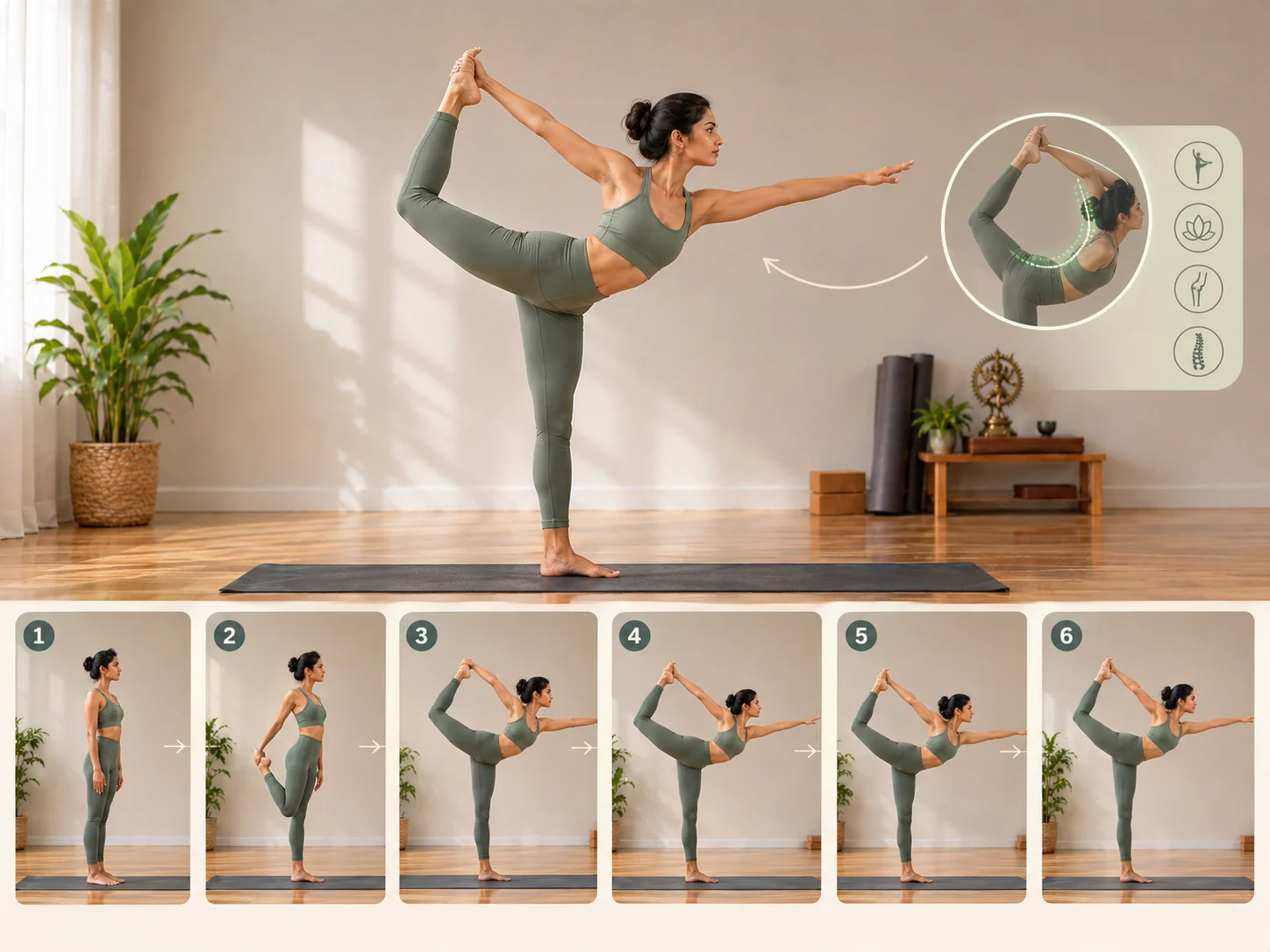

What is Poorna Natrajasana?
Full Natarajasana, also known as Lord of the Dance Pose, is an advanced standing backbend that embodies grace, strength, and balance. Named after Nataraja, the dancing form of Lord Shiva, it symbolizes the cosmic dance of creation and destruction. Here, one leg is grounded firmly while the other is lifted behind, with both hands reaching back to hold the foot or ankle, creating a deep arch in the spine. It stretches the chest, shoulders, thighs, and hip flexors, while strengthening the standing leg, core, and back muscles. Practicing Full Natarajasana improves focus, stability, and flexibility, making it both a physically and mentally empowering asana.
Position type: Backbend and Hip-opener
Posture type: Standing
Ideal for: Flexibility
Targets: Back and hips
Pose level: Advanced
How to Prepare for Full Natarajasana:
Preparing for Full Natarajasana requires a combination of strength, balance, flexibility, and focused awareness. Proper warm-up and targeted stretches are essential to ensure safe practice and optimal alignment.
- Hip Flexor and Quadriceps Flexibility: Since Full Natarajasana involves a deep backbend with the leg lifted, stretching the hip flexors and quadriceps is crucial. Practice Low Lunge, High Lunge with a quad stretch, Pigeon Pose, and Bridge Pose to open the hips and lengthen the front of the thighs. Adding dynamic stretches like Lunges with gentle pulses can enhance mobility.
- Spinal Flexibility and Back Strength: A supple spine supports the deep arch required in this pose. Practice Cobra Pose, Upward Facing Dog, Bow Pose, and Camel Pose to build spinal flexibility. Strengthen the back muscles with Locust Pose and Sphinx Pose to maintain stability and control in the backbend.
- Shoulder Flexibility and Chest Opening: For the overhead grip in Full Natarajasana, shoulder mobility is key. Include poses like Cow Face Pose, Thread the Needle, and Reverse Prayer Pose to improve shoulder flexibility. Chest-opening asanas like Fish Pose and Puppy Pose also prepare the upper body for the deep stretch.
- Balance and Core Engagement: Since Full Natarajasana is a balancing pose, enhancing stability is important. Tree Pose, Warrior III, and Standing Splits help develop balance and core control. Practice Plank variations and Boat Pose to build core strength, which aids in maintaining alignment while balancing.
- Hamstring Flexibility:
Flexible hamstrings prevent tension in the standing leg. Practice Standing Forward Fold, Pyramid Pose, and Reclined Hand-to-Big-Toe Pose to gently stretch the hamstrings, supporting better alignment and ease in the pose.
How to do Full Natarajasana:
Getting into the Posture:
- Stand tall with your feet hip-width apart, arms relaxed by your sides, and spine elongated. Ground evenly through both feet to establish balance.
- Gradually shift your weight onto your left foot, engaging your core and firming the thigh of the standing leg to maintain stability.
- Bend your right knee and bring your right heel towards your glutes. Reach back with your right hand and grasp the inside of your right foot or ankle.
- Extend your left arm forward, parallel to the floor, for balance. Focus your gaze (drishti) on a fixed point ahead to enhance stability.
- As you inhale, press your right foot firmly into your right hand while lifting the foot higher behind you. Simultaneously, lean your torso slightly forward, creating a dynamic stretch through your chest, shoulders, and thighs.
- If you’re comfortable, reach your left hand back to grasp the right foot alongside your right hand, creating a symmetrical grip. Lift the chest, arch the back, and draw the foot upward to deepen the backbend while keeping the hips squared.
- Breathe deeply and hold the pose for 5–10 breaths, maintaining balance, strength, and openness in the chest and shoulders.
Getting out of the posture:
- To exit the pose, slowly release your grip, lower your right leg with control, and return to Tadasana.
- Balance the practice by repeating the pose on the opposite side.
Key Alignments for Full Natrajasana:
- Keep your hips facing forward to maintain balance and proper alignment.
- Activate your core muscles to support the spine and prevent overarching the lower back.
- Open the chest and draw the shoulder blades together to create space and stability in the upper body.
What are the Benefits of Full Natrajasana?
Full Natarajasana improves balance, focus, and coordination, enhancing overall body awareness. The deep backbend stretches the chest, shoulders, hip flexors, and quadriceps, promoting flexibility and opening the heart center. It strengthens the standing leg, glutes, core, and back muscles, building stability and endurance. This pose also stimulates the nervous system, improving concentration and mental clarity. In Poorna Natrajasana the chest opening helps improve respiratory function, while the graceful posture also encourages a sense of confidence, poise, and inner strength.
What are the Contraindications of Full Natrajasana?
Full Natarajasana should be practiced with caution if you have back injuries, such as herniated discs or chronic lower back pain as it is a deep backbend that can aggravate these issues. People with shoulder problems, including dislocations or rotator cuff injuries, may find the overhead grip challenging and risk further strain. Similarly, individuals with hip or knee injuries should be cautious due to the stress placed on these joints, particularly in the standing leg. Those with ankle instability or balance disorders, such as vertigo, are at a higher risk of falling and should modify the pose and use support. Individuals with heart conditions or high blood pressure should consult a doctor before attempting this posture, as the intense backbend can impact cardiovascular function. Pregnant women should avoid Full Natarajasana due to the deep stretch and balance demands. It’s always best to practice under the guidance of an experienced yoga teacher, especially when managing health concerns.
Counterposes of Full Natrajasana
Practice Child’s Pose, Shishuasana or Downward-facing Dog Pose after doing Full Natarajasana.
Variations of Full Natrajrasana
Easy Variations:
- Supported Natarajasana (Using a Wall or Chair):
Stand next to a wall or hold the back of a chair for support. Bend one knee, grasp the ankle with the same-side hand, and gently press the foot into the hand without leaning forward too much. This helps improve balance while working on flexibility. - One-Handed Natarajasana:
Instead of reaching both hands back, hold your lifted foot with just one hand (the same-side hand) while extending the opposite arm forward for balance. This reduces the intensity of the backbend and shoulder stretch, making it accessible for beginners.
Advanced Variations:
- Full Natarajasana with Overhead Grip (Strap-Assisted or Without):
For deeper flexibility, reach both arms overhead to grasp the lifted foot, creating an intense backbend and shoulder stretch. Use a strap looped around the foot if you’re working toward this advanced variation to gradually build flexibility. - Bound Natarajasana:
In this variation, instead of holding the foot with an open grip, interlace your fingers around the foot or ankle, pulling it higher while maintaining balance. This requires exceptional flexibility, strength, and focus, intensifying the chest opening and backbend.
Advice for Beginners:
For beginners attempting Full Natarajasana, it’s important to approach the pose with patience and mindfulness. Focus on building a strong foundation by improving balance, core strength, and flexibility in the hips, shoulders, and back. Using props such as a strap around the lifted foot or practicing near a wall for support can help maintain stability and prevent strain. Remember to keep the standing leg strong, engage the core to protect the lower back, and avoid forcing the backbend. Consistent practice, along with proper warm-up and guidance from an experienced teacher, will help you progress safely and confidently.
Shvasa Tips for Full Natrajasana:
- Engage your core and firmly ground through the standing foot to maintain balance before deepening the backbend.
- If reaching your foot is challenging, loop a strap around the lifted foot to gradually improve shoulder and back flexibility.
- Instead of collapsing into the lower back, lift through the chest and draw the shoulder blades together to create a graceful, open posture.
Join Shvasa yoga to learn how to practice Full Natarajasana LIVE on Shvasa.





.png)


%201.svg)


%201.png)


%201.svg)