


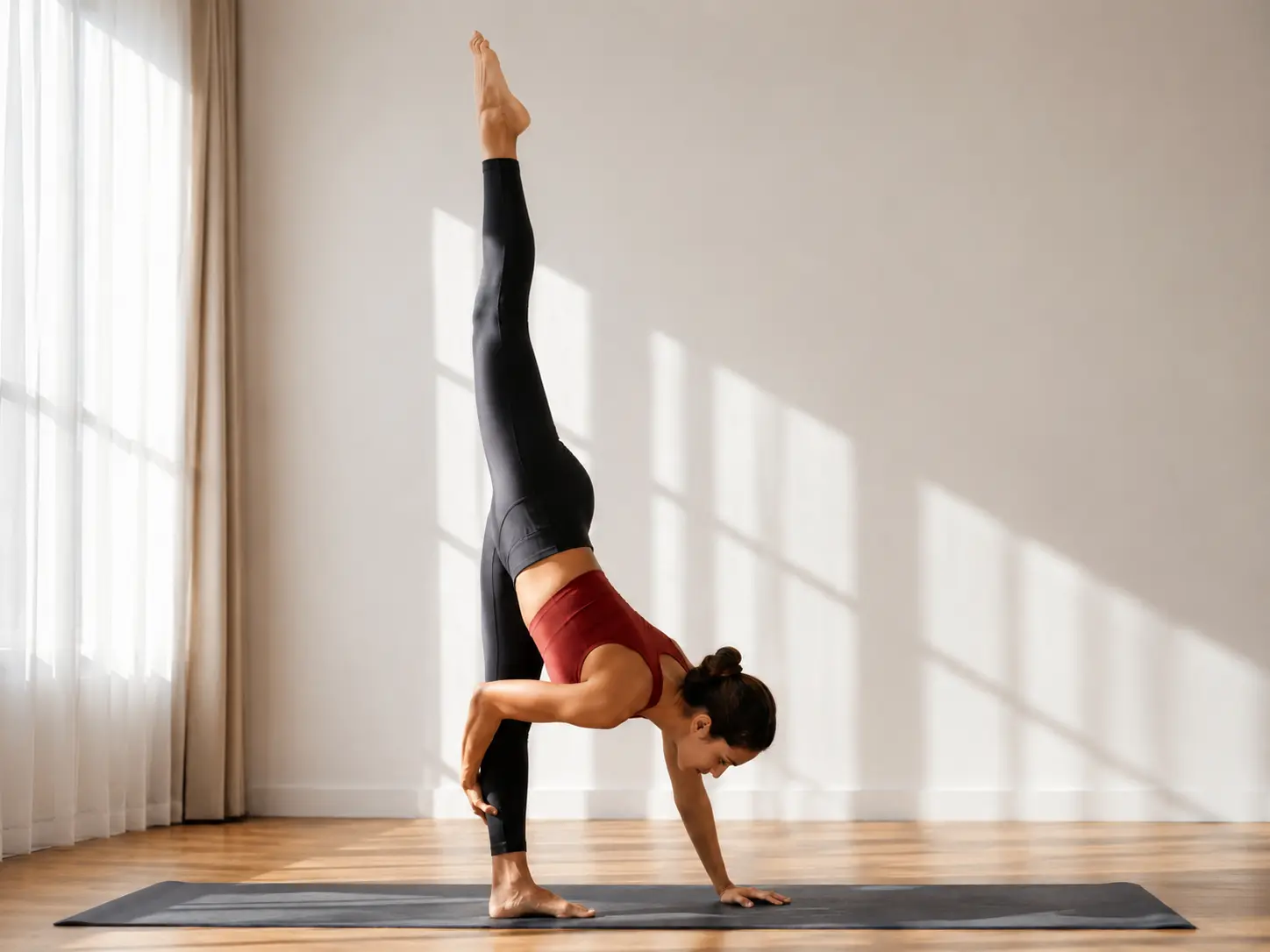

What is the Standing Split Pose?
The Standing Split Pose, or Urdhva Prasarita Eka Padasana, is a dynamic yoga posture that challenges both flexibility and balance. In this pose, one leg remains firmly grounded while the other extends upward toward the sky, creating an intense stretch for the hamstrings, hips, and lower back. It also strengthens the supporting leg, core, and stabilizing muscles, enhancing overall body awareness. The standing split is often used as a preparatory pose for more advanced inversions and serves to improve focus and concentration. While the pose can seem daunting at first, modifications, such as using blocks or bending the standing knee, make it accessible to beginners. Practicing this pose regularly can promote better flexibility, balance, and a sense of achievement.
Position type: Split
Posture type: Standing
Ideal for: Flexibility and mobility
Targets: Hips and groin
Pose level: Advanced
How to Prepare for the Standing Split Pose?
Preparing for Standing Split Pose involves gradually building flexibility and strength in the hamstrings, hips, and lower back while improving balance. This ensures proper alignment and a safe transition into the posture.
- Hamstring Flexibility: Focus on stretches such as Downward-Facing Dog, Pyramid Pose, Reclined Hand-to-Big-Toe Pose, and Standing Forward Bend to loosen the hamstrings. Incorporating dynamic movements like Half Splits and flowing transitions between Low Lunge and Half Splits can further enhance flexibility.
- Hip Mobility: Open the hips with poses like Garland Pose, Bound Angle Pose, Low Lunge, and Pigeon Pose. Adding lateral movements such as Skandasana (Side Lunge) can also aid in hip mobility.
- Core Strength and Balance: Build stability with poses like Tree Pose, Warrior III, and Chair Pose to strengthen the core and improve balance, which is crucial for maintaining the posture. Regular practice of these preparatory poses will make Standing Split more accessible and aligned.
How to do Standing Split Pose?
Getting into the Posture:
- Begin standing in Tadasana (Mountain Pose). Fold forward at the hips, letting your hands rest on the floor, blocks, or your shins. Keep your knees slightly bent if needed.
- Place your hands firmly on the floor or blocks for support. Shift your weight onto one foot, grounding it firmly into the mat.
- Slowly lift your other leg straight behind you. Engage the glutes and thighs to raise the leg as high as your flexibility allows, aiming for a straight line with your upper body.
- For beginners or to focus on alignment, keep your hips square to the floor. If you are more advanced, you may open the lifted leg's hip slightly for a deeper stretch.
- Keep your standing leg strong and active, pressing into the ground. Engage your core muscles to stabilize the posture and lengthen through the crown of your head.
- Place your hands on the ground, blocks, or around the standing ankle for balance. Alternatively, you can reach one or both hands toward the standing leg for a deeper stretch.
- Stay in the pose for 5–10 breaths. Focus on balance and gently deepen the stretch in the lifted leg and hamstrings.
Getting out of the Posture:
- Lower the lifted leg with control and return to a Forward Fold. Repeat on the other side.
Key Alignments in Standing Split Pose:
- Keep the hips square to the floor to maintain proper alignment and prevent overstraining.
- Ground the standing leg firmly, keeping it strong and slightly bent if needed for stability.
- Maintain a long spine by engaging the core and reaching through the crown of the head.
What are the Benefits of Standing Split Pose?
Standing Split Pose deeply stretches the hamstrings, calves, and hips, improving flexibility and mobility in the lower body. The pose strengthens the standing leg, glutes, and core, enhancing overall balance and stability. By engaging focus and concentration, it promotes mental clarity and mindfulness. The inversion element - where the head is lower than the heart - can help increase blood circulation and provide a calming effect on the mind. Practicing Standing Split Pose prepares the body for more advanced inversions and balancing postures. It’s an excellent way to challenge your body and mind while promoting a sense of accomplishment.
What are the Contraindications of Standing Split Pose?
Standing Split Pose should be avoided if you have severe hamstring, lower back, or hip injuries, as the deep stretch may aggravate these areas. Those with balance issues or ankle injuries should also exercise caution, as the pose requires stability on one leg. Pregnant women should refrain from this pose due to the potential strain on the body and the inversion-like position. People with high blood pressure or heart conditions should avoid deep inversions, as the pose can increase pressure in the head and upper body. Always listen to your body and modify the pose as needed to avoid strain.
What are the counter poses for Standing Split Pose?
Practice Tadasana, Uttanasana or Downward-facing Dog pose for a few minutes after doing Standing Split Pose.
Variations of Standing Split Pose:
Easy Variations:
- Bend the Standing Knee: Instead of keeping the standing leg straight, slightly bend the knee to make the pose more accessible and reduce strain on the hamstring.
- Use Blocks: Place yoga blocks under your hands for extra height and support, making it easier to maintain balance and alignment while stretching the hamstrings.
Advanced Variations:
- Split with Hands to Ankle: In the full expression of the pose, reach your hands toward the ankle of the standing leg for a deeper stretch and more intense balance challenge.
- Arms Overhead: Once in the pose, extend both arms overhead with palms facing each other, adding an element of length and opening through the shoulders and chest while deepening the stretch in the hamstrings.
Advice for Beginners:
For beginners, it's important to focus on building stability and flexibility gradually in Standing Split Pose. Keep a slight bend in the standing leg to avoid straining your knee and allow for a more controlled stretch. Don’t worry about lifting the back leg too high - focus on keeping it straight and engaging your core. Above all, listen to your body, and practice with patience and consistency to improve over time.
Shvasa Tips:
- Activate your core muscles to help maintain balance and protect your lower back while lifting your leg.
- Place blocks under your hands if you're struggling to reach the floor, which will provide stability and help you maintain proper alignment.
- Keep your breath steady and deep to help release tension, stay grounded, and enhance your balance during the pose.
Learn how to practice Standing Split Pose live with experienced yoga teachers on Shvasa.







%201.svg)


%201.png)


%201.svg)