


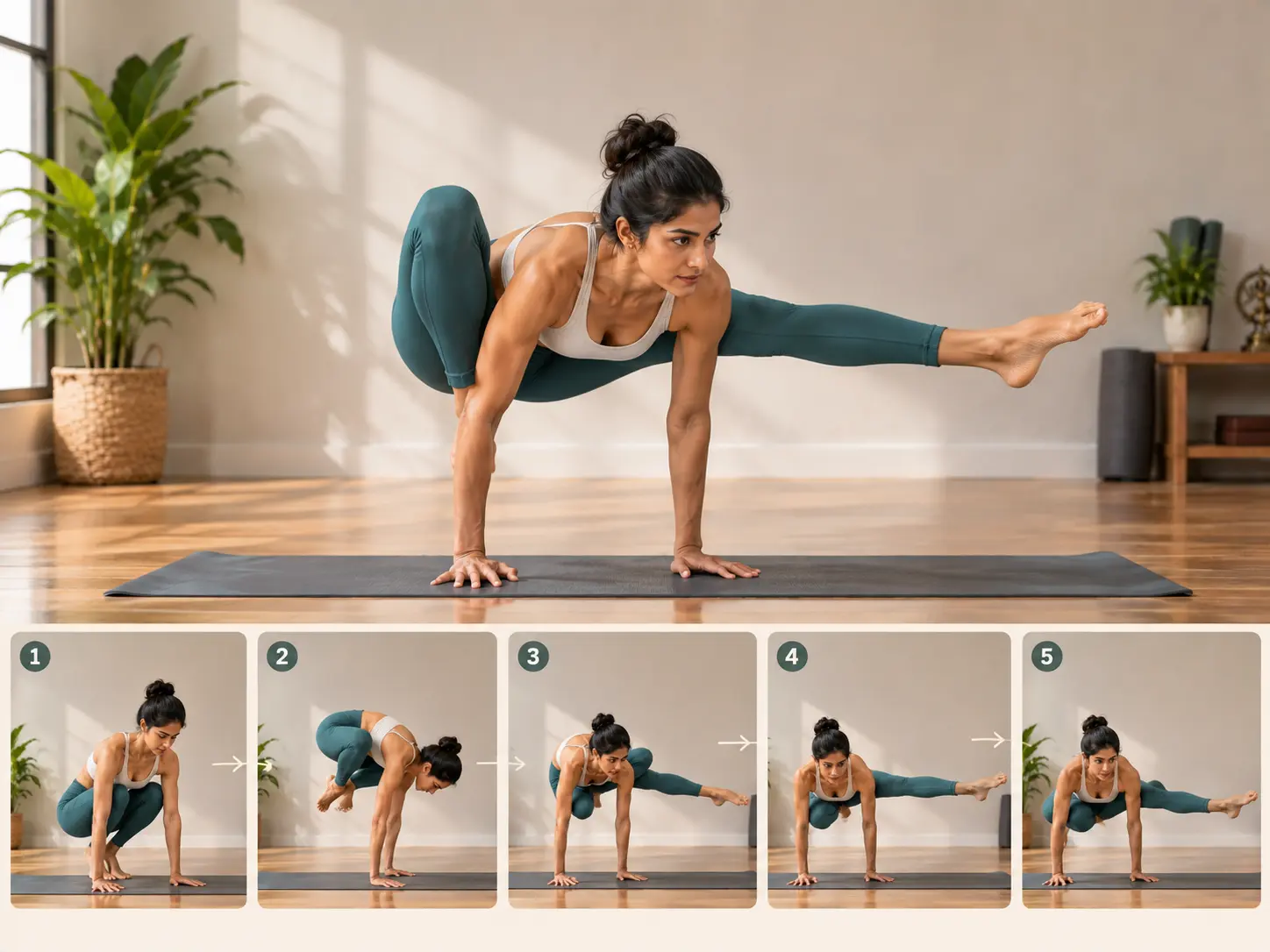

What is Flying Crow Pose?
The Flying Crow Pose, known as Eka Pada Galavasana, is an advanced arm balance in yoga that combines strength, balance, and flexibility. It involves balancing on the hands while lifting one leg behind and resting the other leg on the bent arms. This pose is a progression from Crow Pose, requiring a strong core, open hips, and steady focus. Practicing Flying Crow helps improve upper body strength, wrist stability, and mental concentration. It’s also an empowering pose that encourages practitioners to overcome fear and build confidence. As a challenging posture, it’s recommended to warm up thoroughly with hip-opening and core-strengthening exercises before attempting it.
Position type: Arm strength and balance
Posture type: Balancing
Ideal for: Strength
Targets: Arms, abdomen
Pose level: Advanced
How to Prepare for Flying Crow Pose?
- Wrist Strength and Flexibility: Flying Crow places a considerable load on the wrists. Strengthen and stretch your wrists with exercises like Wrist Rolls, Tabletop Pose with wrist rotations, and Plank Pose.
- Core Activation: A strong core is essential for stability in Flying Crow. Engage in core-strengthening exercises like Boat Pose (Navasana), Plank Pose, and Forearm Plank to build control and balance.
- Hip Openness: The posture requires significant hip flexibility. Prepare with hip-opening poses like Pigeon Pose (Eka Pada Rajakapotasana), Garland Pose (Malasana), and Bound Angle Pose (Baddha Konasana).
- Arm and Shoulder Strength: Strengthen your arms and shoulders with practices like Chaturanga Dandasana (Four-Limbed Staff Pose), Crow Pose (Bakasana), and Dolphin Pose.
- Balancing Practice: Hone your balance by working on foundational arm balances like Crow Pose and variations like Side Crow. This develops the coordination and strength needed for Flying Crow.
How to do Flying Crow Pose?
Getting into the posture:
- Stand with your feet together, bend your knees, and bring your palms to your chest in a prayer position.
- Lift your right foot and place your right ankle on your left thigh, just above the knee, creating a figure-four shape with your legs.
- Slowly hinge at your hips, lowering your chest toward your legs while keeping your spine long. Bring your hands to the mat shoulder-width apart in front of you.
- Bend your elbows slightly and position your right shin across your upper arms, resting it securely near your triceps. Keep your left leg active and strong.
- Lean forward gradually, shifting your weight onto your hands. Press firmly into your palms to activate your shoulders and arms.
- Engage your core and extend your left leg straight behind you, keeping it parallel to the floor. Keep your gaze forward to maintain balance.
- Stabilize by distributing weight evenly between your hands and core. Hold the pose for a few breaths, maintaining steady focus.
Getting out of the posture:
- To release, lower your left foot back to the floor, return to Chair Pose, and repeat on the other side.
Key Alignments in Flying Crow Pose
- Maintain a strong, active core throughout the pose to stabilize your body and prevent collapsing into your arms. This helps with control and balance.
- Ensure your shoulders are stacked directly above your wrists, and keep your elbows bent at a 90-degree angle to create a solid foundation for the pose.
- Extend the lifted leg fully, keeping it straight and parallel to the floor. Engage the muscles in your leg and point your toes to help in maintaining balance and alignment.
What are the benefits of Flying Crow Pose?
Flying Crow Pose strengthens the arms, shoulders, and wrists while improving overall upper body stability. The pose engages and tones the core muscles, enhancing balance and control. By incorporating a deep hip-opening component, it increases flexibility in the hips and groin. Practicing Flying Crow enhances focus, concentration, and coordination, fostering mental clarity and confidence. It also encourages overcoming fear and builds trust in your own strength and abilities. This advanced arm balance cultivates a sense of empowerment, making it both a challenging and rewarding addition to your yoga practice.
What are the Contraindications of Flying Crow Pose?
Flying Crow Pose requires significant strength, flexibility, and balance, making it unsuitable for those with wrist, shoulder, or elbow injuries as it places considerable pressure on these areas. People with hip or knee issues may find the deep hip flexion and knee stability required for this posture challenging or potentially harmful. It is not recommended for pregnant women due to the risk of falls and strain on the abdomen. Anyone lacking sufficient core or arm strength should refrain from attempting this pose until they build the necessary foundation. Beginners without proper preparation and those prone to balance issues or vertigo may also face increased risk of injury. It’s essential to practice under the guidance of an experienced teacher and ensure readiness before attempting Flying Crow Pose.
What are the counterposes of Flying Crow Pose?
Practice Child’s Pose or the Staff Pose for a few minutes after doing Flying Crow Pose. Relax in these postures by taking a few deep breaths. You can also gently rotate your wrists to ease the pressure from them.
Variations of Flying Crow Pose
Easy Variation:
- Crow Pose (Bakasana): Start with Crow Pose as a foundation for Flying Crow. In Crow Pose, you balance on your hands with your knees resting on your upper arms, keeping the feet grounded. This variation builds wrist strength, core stability, and arm engagement needed for Flying Crow.
- One-Legged Crow Pose (Eka Pada Bakasana): From Crow Pose, lift one leg off the floor and extend it backward, keeping the other leg bent. This variation works on strengthening the arms, wrists, and core while gradually introducing the idea of balancing on one leg.
Advanced Variation:
- Flying Crow with Leg Extension: From One-Legged Crow, extend both legs fully behind you while keeping the chest lifted and engaging the core. This advanced variation challenges both balance and strength in the arms, core, and legs.
- Flying Crow with Split Leg: In this variation, one leg extends straight behind you while the other leg opens into a split, both in the air. This requires advanced flexibility in the hips and hamstrings, along with significant arm and core strength for stability.
Advice for Beginners doing Flying Crow Pose
Take the time to build a solid foundation before attempting Flying Crow Pose. Focus on strengthening your core, wrists, and arms. Incorporating hip-opening exercises and developing balance through simpler poses will help prepare your body. Increase flexibility and strength gradually, and don’t rush into the advanced variations. Always listen to your body, and consider practicing under the guidance of an experienced instructor to ensure proper alignment and prevent injury.
Shvasa Tips for Flying Crow Pose
- Activate your core muscles to maintain stability and control as you shift your weight onto your hands.
- Keep a firm grip on the floor by pressing evenly through your palms to support your body weight.
- Maintain a straight line with your lifted leg and keep your shoulders directly above your wrists for better balance.
Learn how to practice Flying Crow Pose as well as preparatory poses that work towards improving arm, shoulder and core strength LIVE on Shvasa.








.png)


%201.svg)


%201.png)


%201.svg)